The Reef Does Not Start At The Sea
Bonaire is easy to turn into a picture: blue water, a flamingo, a cactus against the sky, a quiet road through the mondi, or a diver floating above the reef.
Those images are beautiful. But they can also make nature feel like scenery. Something we admire. Something we use in tourism campaigns.
But nature is not scenery. It does work.
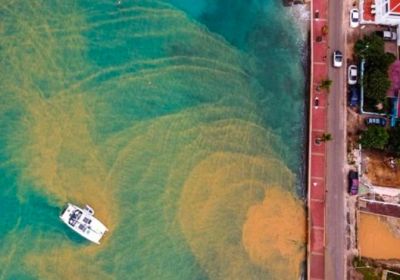
The reef helps soften the sea before it reaches the coast. Mangroves and seagrass support marine life. Saliñas, rooien, dammen and open land decide how water moves after heavy rain. Vegetation holds soil. Soil affects runoff. Runoff affects the sea.
That is why the reef does not really start at sea. It starts in the rooien after a hard shower. In bare soil. In goats eating young vegetation. In wastewater systems. In construction choices. In roads that cut across natural water flows. In yards, gutters, septic tanks, parking lots and cleared plots.
The sea receives what the land sends.
By the time sediment, nutrients or pollution reaches the reef, the problem looks marine. But often, the story begins earlier. That matters, because it changes who is responsible.
Reef protection cannot only be left to marine park staff, divers, coral nurseries or scientists. Their work matters. But they cannot restore a reef into health while the island keeps sending pressure toward it.
If Bonaire’s economy depends on the reef, then protecting the reef is not only an environmental issue. It is economic, infrastructure and tourism policy.
2026, June 26th - Kralendijk
Kokolishi Karne
Published Essays
The Goat Problem Is Bigger Than Goats
On Bonaire, goats are everywhere. Along the road. In the mondi. Near houses. On empty lots. Sometimes in places where you wonder how they even got there. They are part of the island’s image, and for many people they are also part of memory, culture and livelihood.
That is exactly why the issue is difficult. But difficulty does not make it disappear.
The problem is not simply that goats exist. The problem is what happens when grazing pressure becomes bigger than the land can carry.
Young plants do not get the chance to grow. Vegetation becomes thinner. Soil loses protection. Then, when heavy rain comes, water runs faster and takes soil with it. What starts as a grazing issue becomes an erosion issue, a water issue, a reef issue, a road issue, a farming issue.
That is why the goat problem is bigger than goats.
It shows how hard it is for Bonaire to deal with problems everyone sort of knows, but nobody wants to carry them alone. A serious solution cannot be cruel or arrogant. People connected to livestock should not be treated as enemies of nature. Any real approach needs animal welfare, practical support and time for transition.
If Bonaire wants healthier landscapes, better water retention, less erosion and stronger ecosystems, grazing pressure must be part of the conversation.
2026, 7th July Kralendijk
By Kokolishi Karne

Caring for a healthy goat in a fenced yard with food, water and shade.
Conservation can not run on leftovers
Too often, we treat conservation as if it can survive on leftover attention. A project here, a grant or donation there, a temporary budget. That is no way to protect the natural systems that underpin Bonaire’s economy, identity and quality of life.
Nature organizations on Bonaire do essential work. They hold valuable knowledge, manage protected areas, restore ecosystems and often detect environmental change long before the rest of us do.
But we should be careful not to confuse dedication with sound institutional design.
A resilient conservation system requires predictable funding, long-term cooperation and clear public policy. Tourism and development should help sustain the natural systems they depend on, and government cannot continue to treat conservation as a footnote.
At a minimum, Bonaire needs an up-to-date, formally adopted nature policy that provides clear priorities, responsibilities and direction. Without that foundation, conservation is forced to operate through fragmented initiatives rather than a coherent public framework.
When prevention is neglected, the costs eventually return through environmental decline, economic damage and expensive restoration.
Nature is not a hobby of NGOs. It is part of Bonaire’s foundation.
2026, 19th July Kralendijk
The third essay in Kokolishi Karne’s Nature & Governance series.
related source:
https://www.linkedin.com/pulse/financing-nature-dutch-caribbean-from-project-cycles-q1tye/
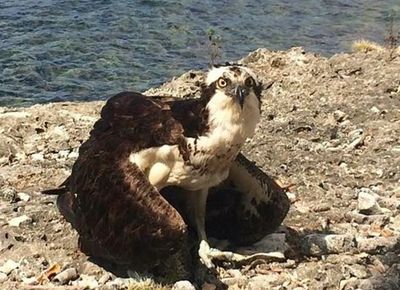
An osprey taking a well-earned rest on the shores of Bonaire during its migration.
Tourism and Nature Need Each Other
Tourism on Bonaire is built on a promise: clear water, healthy reefs, open landscapes, flamingos, tranquility.
A certain feeling that the island has not become like everywhere else.
That promise is powerful. It brings income, jobs, business opportunities and connections to the world. Many families depend on tourism, directly or indirectly.
But there is a tension we do not always like to name. Tourism depends on what it can also slowly wear down.
Every visitor uses something: roads, water, energy, waste systems, dive sites, beaches and neighborhoods. None of this is automatically bad. But it is not negligible either.
A mature tourism policy starts with a simple honesty: the product is not only service. The product is the island itself.
If the reef declines, if coastal areas become crowded, if waste and wastewater systems lag, if traffic grows, if construction pressure increases, if residents feel pushed out of their own living space, tourism may still grow on paper.
But the foundation becomes weaker.
That is why a visitor economy that depends on nature must reinvest in nature. Not merely as charity or branding, but as maintenance of the economic base.
Public policy should ask serious questions. How much pressure can a place handle? Which systems must be strengthened before growth continues? Which areas need rest? Who pays for the costs that tourism creates? How much of the value returns to the reef, coast, landscape and community?
Series Nature Governance
By author: Kokolishi Karne
Kralendijk 22 June 2026
Related article: How much economic space does Bonaire need to build a truly sustainable tourism sector? BONHATA: Economic space as a foundation for sustainable tourism.

The beauty attracting visitors today depends on the choices we make now.
Climate Change Is a Governance Test
Climate change is usually described through its physical effects: rising temperatures, drought, sea-level rise and stronger storms.
All of that is real.
But climate change is also something else.
It is a test of governance.
It tests whether institutions can think beyond a single budget cycle. It tests whether departments can work together when challenges do not fit neatly within one policy area. It tests whether governments can communicate honestly, even when the message is uncomfortable.
Climate change affects almost every aspect of community life. No single department can address it alone. No single NGO can carry the responsibility. No single project can solve it.
That is why climate adaptation is not only about building infrastructure. It is about organizing responsibility.
Who decides what comes first? Who maintains what has been built? Who measures whether risks have actually been reduced? Who explains delays? Who protects the most vulnerable? Who ensures that the same problems are not studied over and over while implementation waits?
These may sound like administrative questions.
In reality, they are questions of leadership.
Every major investment and every spatial planning decision should begin with one simple question:
Does this make Bonaire more resilient, or more vulnerable?
The climate will continue to change.
The question is whether governance can adapt quickly enough to keep pace.
Series: Nature & Governance
Author: Kokolishi Karne
29 July 2026
Related sources:

Climate change is not only about nature. It is about governance.